
.png)


The Beauty That Arrives Later: Patina on Luxury Doors

When Time Becomes the Craftsman
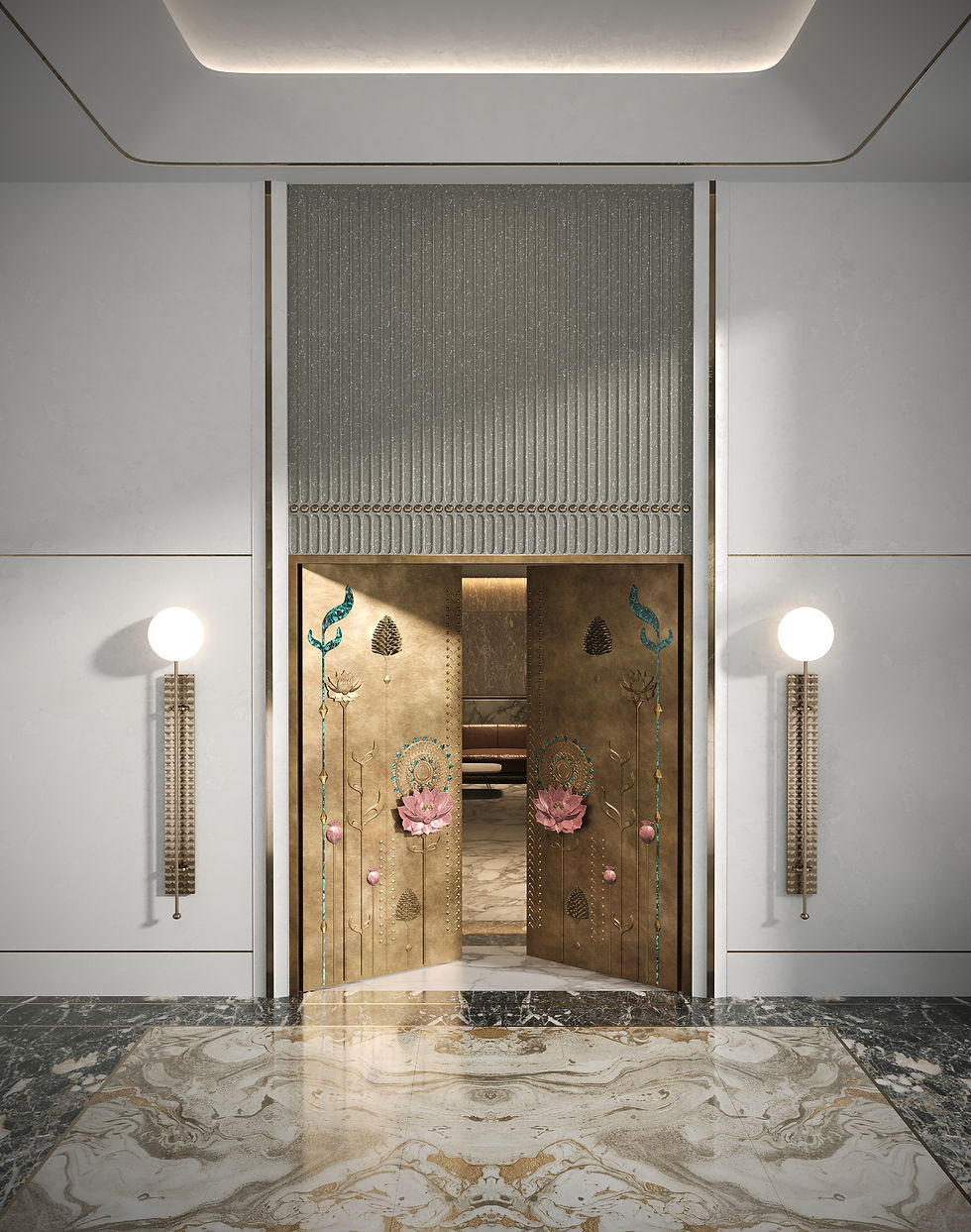
There is a particular kind of beauty that cannot be rushed: one that only emerges through the slow conversation between metal and the world around it. Patina is that beauty. On a main door, it is not the mark of age but the signature of intention; not decay, but deepening.
For those who understand luxury not as perfection frozen in time, but as character made richer by it, patina is one of the most powerful tools in architectural door design.
The Bronze Stripped Door
The Bronze Stripped Door - Simplicity with something to say.
What Patina Actually Does to Metal
At its core, patina is oxidation - a controlled or naturally occurring reaction on the surface of metals like brass, bronze, and copper. But to reduce it to chemistry is to miss the point entirely.
What patina does, in practice, is give a high end front door something no factory finish ever can: visual memory.
The Swan Door
The Swan Door - Water's soul, cast in bronze.
The metal begins to tell a story. Warm amber tones deepen into amber-brown. Bright copper shifts toward verdigris. Bronze surfaces develop a mottled, ancient richness that catches light differently in the morning than it does at dusk.
In luxury home décor metals, this quality of transformation is not a flaw to be engineered away. It is the highest expression of the material's nature.
LUXURY METAL FRONT DOOR
Depth That Flat Surfaces Cannot Carry
A polished finish is impressive. A patinated surface is unforgettable. The difference lies in dimension. Patina creates micro-variation across the face of a door - subtle valleys of darker tone beside raised ridges that hold their warmth - giving the entrance door design a layered visual quality that draws the eye inward.
A luxury home entrance adorned with a patinated door does not simply greet its visitors; it commands their attention before they ever reach for the handle.
The Smooth Brass Door
The Smooth Brass Door - Light trapped in metal.
This depth becomes especially powerful when combined with embossed or sculptural detailing. Shadow pools in recessed areas. Light crests on raised forms. The result is a front door design that feels alive - something that changes with the seasons, with the hour, with the years.
How Aluminr Harnesses the Power of Patina
At Aluminr, patina is not left to chance. It is crafted. Working in brass, copper, and bronze, Aluminr's artisans apply oxidation techniques with the same precision brought to every other element of their bespoke pieces, shaping not just the finish, but its distribution, its depth, and its dialogue with the door's form.
The result is an architectural door design where the surface has been considered as carefully as the silhouette.
The Throne Door
The Throne Door - Power distilled to pure form.
Whether patina is used to age the sweeping curves of a sculptural panel, to lend gravitas to a geometric motif, or to accentuate the interplay of texture on an embossed mural door, it always serves the same purpose: to make the entrance feel earned, not assembled.
An Entrance That Only Gets Better
The most enduring luxury doors are not the ones that look perfect on day one - they are the ones that look more extraordinary with every passing year. Patina is the promise of that trajectory. It is the decision to invest not in a moment, but in a lifetime of beauty.
For a luxury home entrance that deepens in meaning as it deepens in tone, patina is not a finish. It is a philosophy.
WE ARE BESPOKE LUXURY DOOR MANUFACTURERS
SEE ALSO: Luxury Lift Panels Are Designed Twice - First as Spatial Experience, Then as Engineered Metal
LUXURY METAL FRONT DOOR LUXURY METAL FRONT DOOR LUXURY METAL FRONT DOOR LUXURY METAL FRONT DOOR LUXURY METAL FRONT DOOR LUXURY METAL FRONT DOOR
Ready to Begin?


Comments