

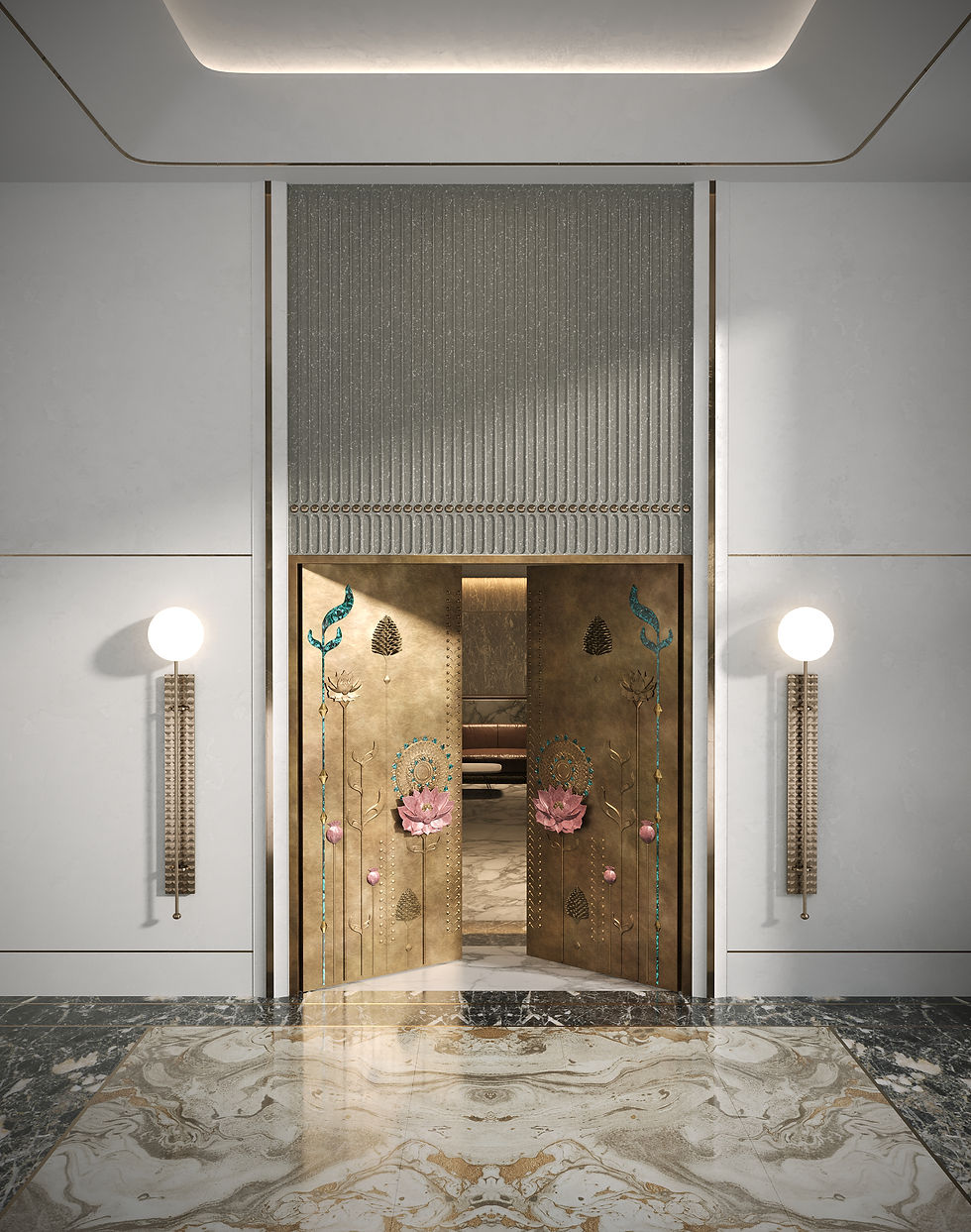


Tarakasi in Architecture: Wire Drawn to Door Scale

FILIGREE COLLECTION
In Cuttack, silver has been drawn into wire and worked into openwork since at least the 12th century. The Odia name carries the method within it, with tara meaning wire and kasi the work done with it. For most of its history, the wire was shaped by hand into small pieces that could fit in the palm. Today, this centuries-old craft is finding new expression in architectural door design, where the intricacy of traditional wirework meets the scale and presence of a contemporary entrance.
The Lineage Moves Into New Metals
Cuttack's artisans work with silver of 90% purity or more. Silver gives the wire its ductility, natural lustre and a softness that yields to the fingers as strands are twisted in pairs. The method rests on two kinds of wire: a heavier strand that draws each outline, and finer twisted strands which pack the space inside it with scrolls, petals and lattices.
But the craft does not end with silver. Some Cuttack workshops already set brass alongside silver for contrast, while copper and its alloys extend the technique even further. Copper and brass are easier to shape, while bronze takes more effort to work with. All three hold a set line across a wider span than fine silver can. This becomes essential when the wire moves beyond the palm to rise to the height of a customised metal door or a bronze main door. Each alloy develops its own patina, while silver tarnishes.
FILIGREE COLLECTION
What Architecture Asks of Wire
Scale changes three things.
Density comes first. At the scale of a palm, the eye can distinguish every coil. Across an entrance hall, however, the same uniform density would blur into a flat grey field. At the scale of a door, the wire must balance areas of intricacy where it gathers with spaces where it opens, allowing the pattern to be read from the far end of a luxury home entrance while still revealing finer details up close, especially around the handle.
Depth follows. Cuttack's filigree has long been shaped in three dimensions, and an architectural surface offers room for this quality to unfold. Strands rise from the surface in layers, each set at a different distance from the eye.
FILIGREE COLLECTION
Finally, light brings it all together. The morning sun highlights the twists in each strand, while the low evening light slips in between the layers, casting shadows from the outlines beneath. As the day progresses, the door takes on a different appearance, with the wire holding light at several depths at once.
For architects and interior designers working on high-end residences, these qualities offer a distinctive approach to bespoke front door design, where material, craftsmanship and light contribute equally to the experience of entering a home.
Where Filigree Finds a New Purpose
FILIGREE COLLECTION
For centuries, nobody asked Tarakasi to be featured at the threshold. Silver defined the scale, and that scale shaped how it was used. A metal soft enough to be twisted between the fingers was never asked to stand at the height of an entrance in all its glory. For generations, the craft remained restricted to the scale of the artist’s hands and the workbench. The question never surfaced because the material seemed to have settled it.
Copper and its alloys make the question worth asking, and it arrives in three parts. Can a twisted strand keep its line across the full height of a door? Can a pattern drawn for close viewing still hold together from across an entrance hall? Can wirework take the daily touch and swing that every main door receives?
CHAVVI OBEROI
The Whispers of Metal Filigree Collection, designed by Chavvi Oberoi, puts those questions to brass, copper and bronze across twenty pieces: fifteen doors and five lift panels. Each piece keeps Cuttack's pairing of outline and infill and lets the alloy carry it to architectural heights.
In upscale homes, the main door becomes the first point at which a visitor encounters an inherited craft on such a scale, with the wire itself helping announce the character of the house. For architects exploring luxury metal doors, the collection presents an approach to metal door design in which structure and pattern emerge from the same strand.
Each of the twenty pieces offers a different response, shaped by the density its alloy can hold, the depth its layers create and the way light falls within the space it occupies.
WE ARE BESPOKE LUXURY DOOR MANUFACTURERS
LUXURY METAL DOOR LUXURY METAL DOOR LUXURY METAL DOOR LUXURY METAL DOOR LUXURY METAL DOOR LUXURY METAL DOOR
When Tarakasi Reaches the Doorway


Comments